

If you close your eyes and imagine the aroma of rural Karnataka, what comes to mind? Perhaps the earthy scent of filter coffee, the tang of tamarind, or the spice of a robust curry. But for those intimately familiar with the Malenadu region—the misty, emerald heart of the Western Ghats—there’s a distinct, sweeter fragrance that defines the winter months: the heady, caramelized perfume of fresh sugarcane juice being slowly coaxed into jaggery.
This is the season of Alemane (sugarcane harvesting and jaggery production), and with it comes a culinary marvel known as Todadevu (also spelled Todedevu). Often playfully dubbed the “thin jaggery dosa,” Todadevu is, in reality, a far more intricate and poetic creation—a whisper-thin, translucent wafer that captures the very essence of its origin.
The Soul of Alemane: Where History and Harvest Meet

The story of Todadevu begins not in a modern kitchen, but by the roaring fires of the Alemane. For centuries, this was a community affair in places like Sirsi, Yellapur, and Siddapur. Families would gather, laboring together to crush sugarcane and boil its juice into rich, golden jaggery. Todadevu emerged from this communal spirit, becoming the seasonal treat for hardworking farmers and eager children.
Its name, Toda (spreading) + Devu (to draw or pull), perfectly describes the unique, almost artistic, technique of its creation. It’s an unfermented crepe, a tradition belonging to an older lineage of Indian flatbreads, lovingly preserved by the Havyaka Brahmin community who passed this precise craft down through generations.
The Art of the Invisible Dosa: A Culinary Performance

What truly sets Todadevu apart is its preparation—a method that defies conventional cooking:
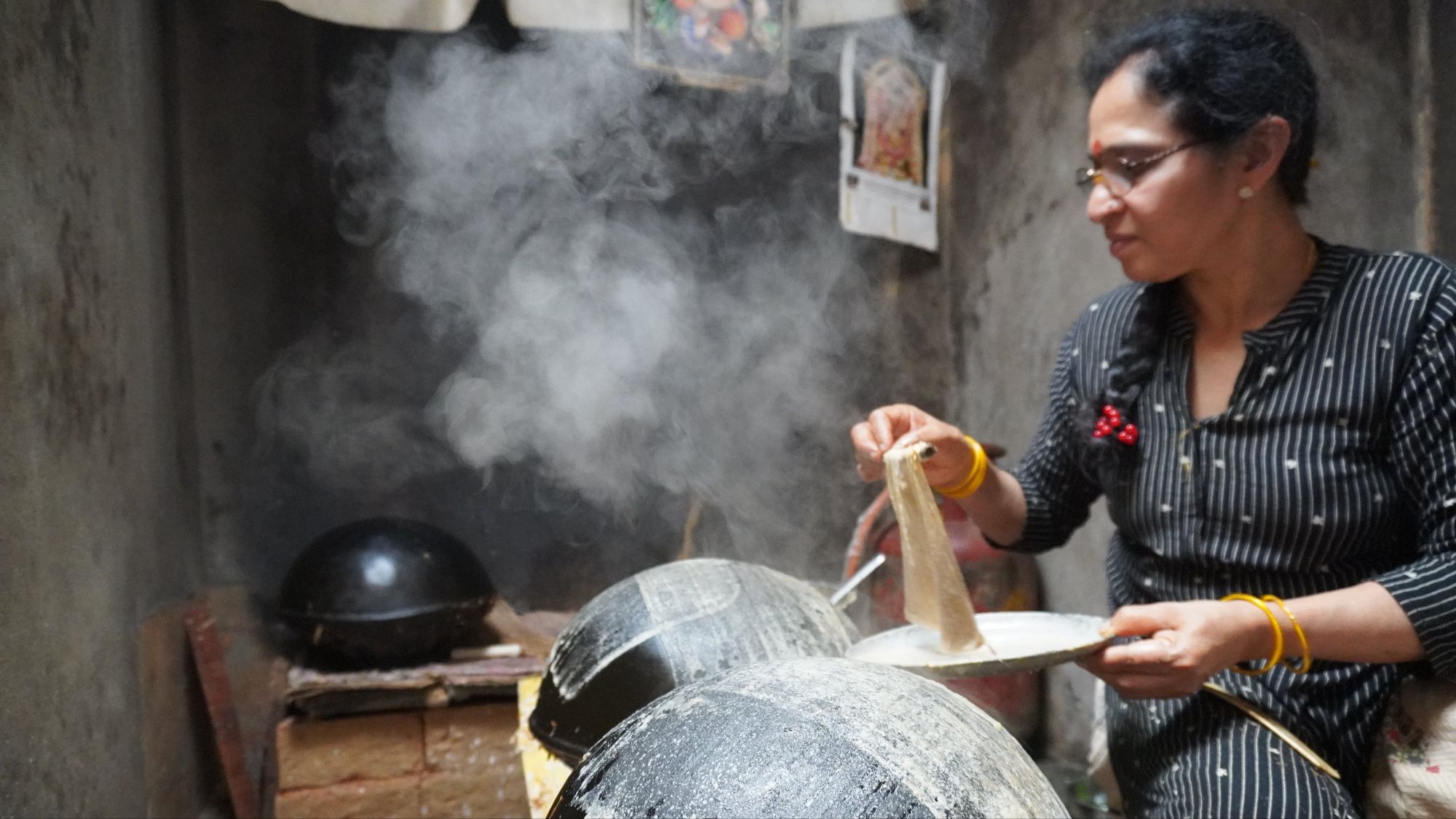
- The Inverted Earthen Pot (Madike): Forget your flat tawa! Traditionally, a large, well-seasoned clay pot (madike) is placed upside down over a roaring firewood stove. The convex, seasoned base of the pot becomes the cooking surface, allowing for an incredibly thin spread.
- The Whispering Batter: The batter is deceptively simple: fine rice soaked and ground to an almost watery, silken paste, enriched with fresh sugarcane juice (or liquid jaggery), a pinch of salt, and fragrant cardamom. The consistency is key—thinner than even a Neer Dosa batter.
- The Cloth-Painting Technique: This is where the magic happens. Instead of a ladle, the cook uses a clean piece of cotton cloth (often tied to a stick or held carefully). Dipping the cloth into the watery batter, they swiftly and deftly wipe or paint a “plus” sign (+) or a cross-hatch pattern onto the scorching hot pot. The steam hisses, and in seconds, the watery film dries and cooks into a translucent sheet.
The cooked Todadevu is then delicately peeled off using a thin sliver of an areca sheath, a testament to using natural materials in traditional kitchens.


A Symphony of Flavors and Textures:
Fresh off the pot, Todadevu is soft, pliable, and almost elastic. But its true character emerges as it cools, transforming into an exquisitely crispy, glass-like wafer that shatters with a satisfying crunch.
- The Taste: Each bite delivers a profound, earthy sweetness from the jaggery, delicately balanced by the warmth of cardamom and a subtle, smoky undertone from the firewood.
- The Experience: While delicious on its own as a crispy snack, the traditional way to enjoy Todadevu is to gently crush the sheets into a bowl and drown them in warm milk and a generous spoonful of fresh, homemade ghee. This transforms it into a comforting, soul-stirring dessert that evokes memories of simpler times.


Todadevu Today: Preserving a Vanishing Art
The world of Alemane is slowly fading as industrialization takes over. The labor-intensive, precise art of making Todadevu is a skill that few younger generations are learning. Yet, there’s a quiet resurgence. Local culinary enthusiasts and cooperatives in regions like Sirsi are working tirelessly to keep this tradition alive. They’ve found ways to make Todadevu year-round, using high-quality Joni Bella (liquid jaggery), allowing this ancestral delicacy to reach beyond the villages and into homes across India and even to the Malenadu diaspora abroad.
Leave a Reply