
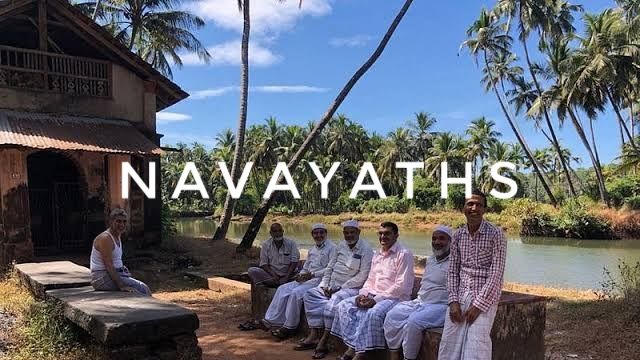

Tucked away on the lush Karavali coast of Uttara Kannada lies Bhatkal, a town that feels like a world of its own. Here, the salty air of the Arabian Sea carries stories of ancient mariners, silk traders, and a unique community that has called this shore home for over a millennium: the Navayaths.
Known for their entrepreneurial spirit, distinct language, and a cuisine that can make any food lover swoon, the Navayaths are more than just a community—they are a living bridge between the Middle East and India.
Who are the Navayaths?
The word Navayath translates to “Newcomer” (from the Persian Naw-Ayad). History suggests that the community was formed by Arab and Persian merchants—primarily from Yemen and Iraq—who arrived on the west coast between the 8th and 15th centuries.
While they maintained their Islamic faith, they didn’t live in isolation. They intermarried with the local Jain community, leading to a fascinating cultural synthesis. Today, they are a prosperous, endogamous group that takes immense pride in preserving their heritage while being global citizens, with many families having strong ties to the Gulf.

A Language of Nine Roots: Nawayathi
The hallmark of Navayath identity is their language, Nawayathi. It isn’t just a dialect; it’s a linguistic tapestry. With Konkani as its base, it weaves in words from Arabic, Persian, Marathi, Urdu, and Kannada.
Though it’s written in the Perso-Arabic script, the rhythm of the language is distinctly Indian. If you walk through the streets of Bhatkal, you’ll hear this musical blend—a language that literally speaks of their history as global travelers.

The “Sains” and The Soulful Architecture:
The old quarters of Bhatkal are organized into Sains (traditional streets). Here, the architecture tells a story of a “leisurely past”:
- The Sien Houses: Traditionally, these houses were built wall-to-wall. They have narrow frontages (15–30 feet) but extend incredibly deep (up to 250 feet!).
- The Courtyard Life: A typical home features an Angan (courtyard), a Wakhuri (bedroom), and a Kood (a special room for women).
- Intricate Woodwork: Many old mansions, like the famous 100-year-old Barni House, were built using Burma teak and decorated with stained glass and carved swings (Hullos).
Did you know? The heritage of Navayath architecture is so unique that a traditional house was salvaged and recreated at the Hasta Shilpa Heritage Village in Manipal to preserve its legacy for future generations.


A Culinary Masterclass: Beyond the Biryani
If there’s one thing that has put Bhatkal on the global map, it’s the food. Navayath cuisine is a sophisticated blend of Arabian techniques and Konkani ingredients.
- Bhatkali Biryani: Unlike the spicy, oily versions found elsewhere, this biryani is white, light, and fragrant. It uses a massive amount of onions and green chilies, and the meat is layered with “velvety” basmati rice without any heavy ghee residue.
- Shaiyyo Biryani: A rare treat where rice is replaced with vermicelli, reflecting a local Konkani twist.
- Mudkuley: Tiny, hand-rolled rice flour balls steamed in a spicy fish or coconut curry.
- The “Appo” Variety: From Fansa Goda Appo (jackfruit pancakes) to Kela Appo (banana pancakes), their snack game is unparalleled.

Modern Community with Ancient Roots:
Today, the Navayaths are known for their philanthropy and commitment to education. Institutions like the Anjuman-e-Hami-e-Muslimeen in Bhatkal have been educational pioneers in the region for over a century.
Whether it’s the smell of Bhatkali Biryani wafting through the air or the sight of white-capped men heading to one of the town’s 60 mosques, the Navayath way of life is a testament to how culture doesn’t just survive; it thrives through adaptation.

Leave a Reply