
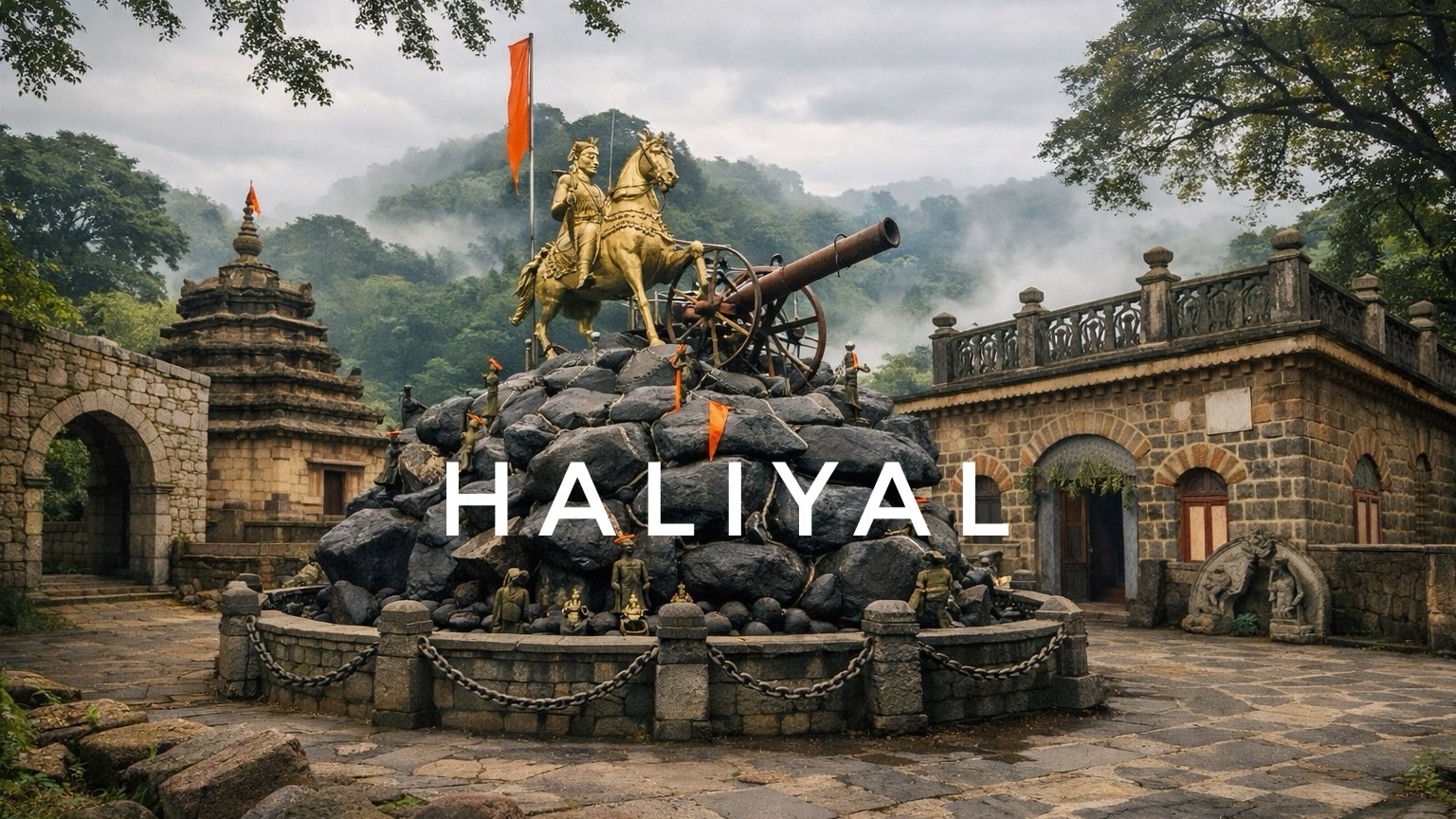

Known as the gateway to the Uttara Kannada district, Haliyal is more than just a taluk headquarters; it is a rare blend of history, culture, and natural beauty. Situated between the dense forests of the Malenadu region and the vast plains of the Deccan, this town has stood witness to the rise and fall of several dynasties over centuries.
Etymology and Ancient Roots
The name ‘Haliyal’ is believed to be derived from the Kannada words ‘Hale’ (Old) and ‘Halli’ (Village/Settlement). This region has been an administrative hub since the time of the Kadambas of Banavasi. During the reign of the Kalyan Chalukyas and the Vijayanagara Empire, it flourished as a vital commercial center. The rare Surya Temple (Sun Temple) at Arlavada stands as a living testament to the ancient heritage of this land.

Chhatrapati Shivaji and the Haliyal Fort
The most significant chapter in Haliyal’s history is the Maratha rule. In the 1680s, Chhatrapati Shivaji Maharaj strengthened the local fort. Built on flat terrain, this fort was protected by deep moats. According to local folklore, crocodiles were bred in these moats to deter enemy invasions. Even today, the massive stone walls and the Mallikarjuna Temple within the fort reflect the confluence of Maratha and local architectural styles.

British Era and the Freedom Struggle
By the late 18th century, Haliyal became a strategic military outpost for the British. The British commander Arthur Wellesley (who later defeated Napoleon Bonaparte and became the ‘Duke of Wellington’) was stationed at the Haliyal Fort. During the First War of Independence in 1858, Haliyal served as a key center of support for Babasaheb Bhaskar Rao Bhave of Nargund in his fight against British rule.
A Melting Pot of Cultural Diversity
The uniqueness of Haliyal lies in its diverse communities:
- The Siddi Community: Originally from Africa, the Siddis escaped Portuguese slavery and found refuge in the dense forests of Haliyal. Their unique ‘Dhamal’ dance and vibrant culture are the pride of the region.
- Migrant Communities: Christian families who migrated from Goa brought a revolution in the fields of agriculture and education. Consequently, Haliyal today is a beautiful blend of Kannada, Konkani, and Marathi languages.
Forest Wealth and Modern Haliyal
During the British Raj, Haliyal’s teak wood was world-famous. Timber from these forests was transported as far as London for shipbuilding. Even today, the local Timber Depot remains one of the most prominent in Asia. Today, Haliyal is progressing rapidly, fueled by agriculture, sugar industries, and esteemed educational institutions.

Haliyal is not just a town to pass through; it is a destination to revisit history. If you travel through Uttara Kannada, do not miss the chance to experience the fort and the rich culture of this ‘Ancient Village’ of the Malenadu.
Leave a Reply